
I.
The first time, I was reading The Forty Rules of Love, Elif Shafak’s telling of Rumi and Shams of Tabriz, and the unlikely, world-altering friendship between them. Still partway through it, unfinished, I had it open on my lap somewhere over the Anatolian plateau, flying towards Kayseri. I don’t remember deciding to turn the page. I just did, the way you do on a long flight, half-reading, half-watching the ground.
The chapter that opened was of Rumi meeting the dervish Shams-e Tabrizi at Konya.
I looked up at the screen in front of me. We were passing over Konya.
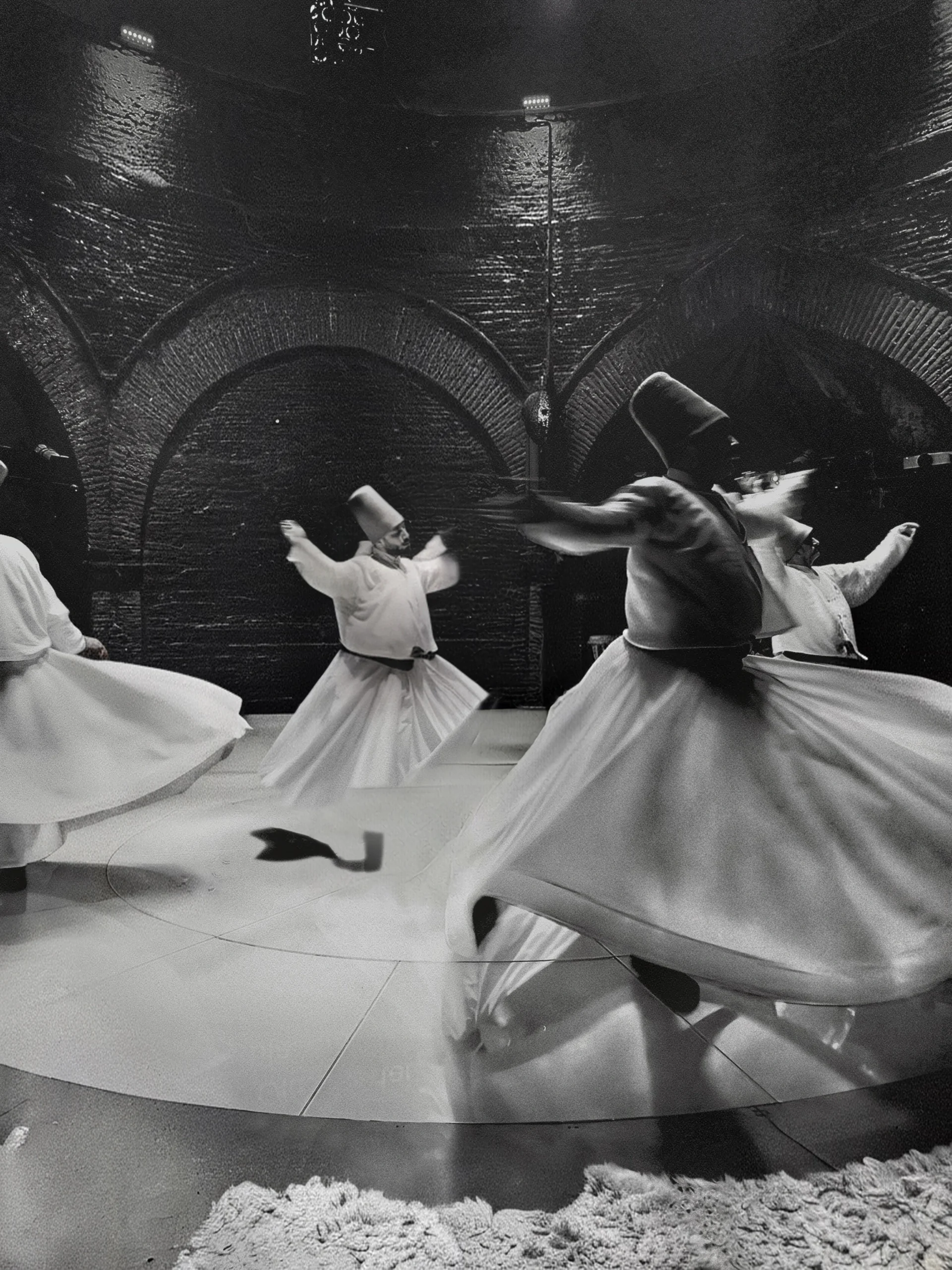
There’s a particular kind of stillness that arrives when a coincidence lands too precisely to explain away. Not the kind you chase, not the kind you can plan for. It simply arrives, and asks nothing of you except to notice it. I sat with that stillness for the rest of the flight, and didn’t think much more of it until that same evening, when I found myself at a Sema, the whirling ceremony of the Mevlevi order. The one Rumi himself began eight hundred years ago in the same city I’d just flown over, reading about him, without meaning to.
I don’t know what to call an evening like that, except spiritual. Not because anything was proven. Because for a few hours, a book, a flight path and a centuries-old ceremony all agreed to happen in the same place, on the same day, without asking my permission.
II.
The second time, the book was The Island of Missing Trees, Shafak again, though I hadn’t planned that either. Set between Cyprus and London, it follows two lovers on opposite sides of the island’s 1974 conflict, and the daughter they raise in England without ever telling her the full weight of what they lived through. Threaded through all of it is a fig tree, a fictional character in her own right, narrating in her own voice, remembering the war the way the humans around her cannot bring themselves to. I was still partway through it, carrying it with me the way you carry a companion rather than a book. Picking it up between places, setting it down, picking it up again, never quite finishing it.
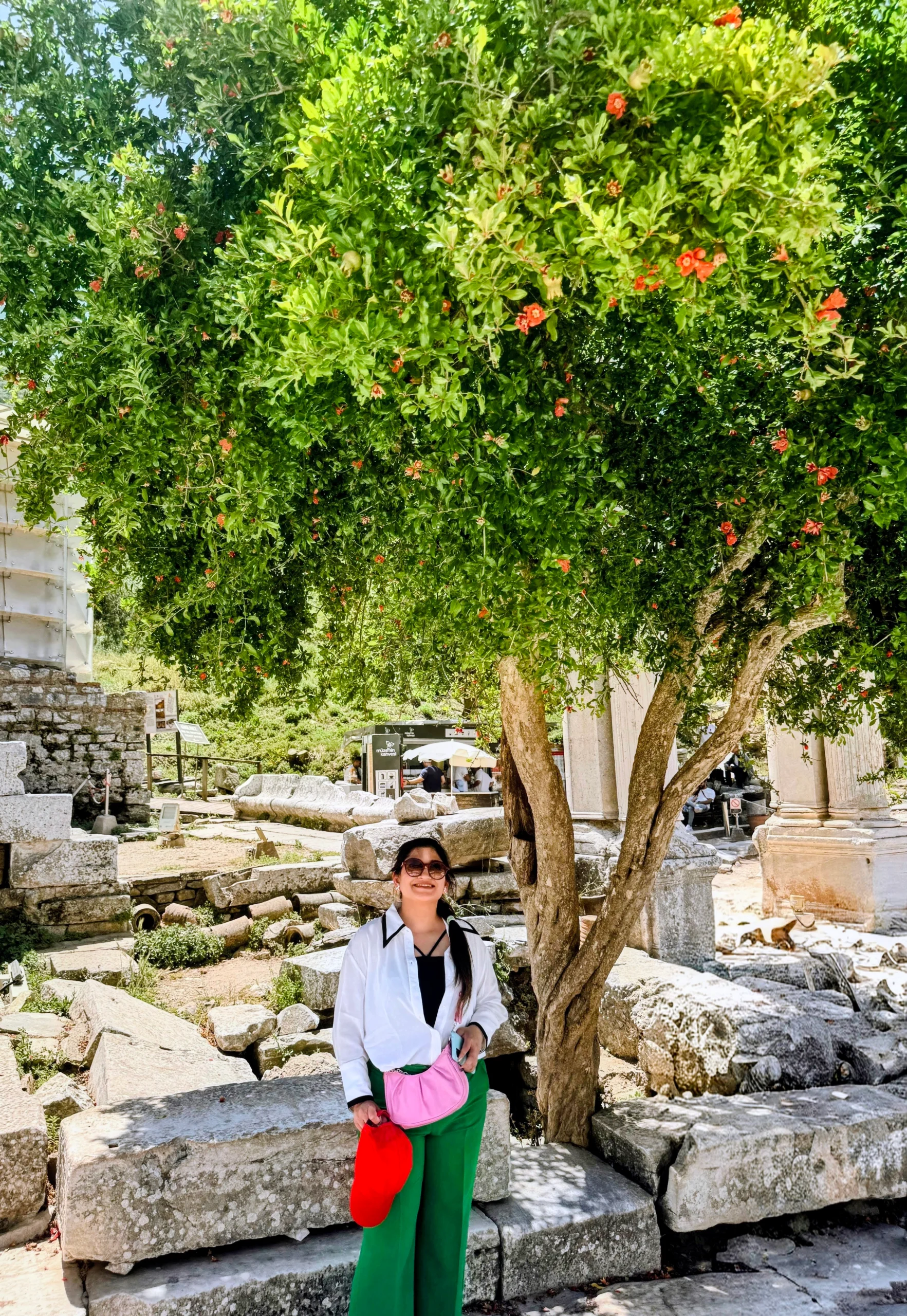
I was at Ephesus, the ancient archaeological city, its marble avenues and half-standing columns laid open under a sun that gives no shade. When I finally needed to rest, without thinking much of it, I stopped under a tree. My guide looked up and told me, almost in passing, that I was standing under a male fig tree.
I didn’t know figs had a distinction like that. She explained: the female tree is the one that bears the fruit we eat. The male does not. It was interesting to learn, but the beauty of it sat somewhere else entirely. I had, without noticing, chosen to stand under the exact kind of tree that was, at that very moment, a character in the unfinished book in my bag. Not a fig tree in general. A male one, specifically, the distinction I’d just been handed standing beneath it.
I don’t think either of these moments means anything, in the way a sign is supposed to mean something. I think they mean exactly what they were: a reminder that the things we’re reading, the things we’re thinking about, have a way of meeting us out in the world if we’re paying enough attention to notice when they do.
That’s the only kind of spiritual experience I trust, really. Not the kind that arrives with certainty. The kind that arrives quietly, mid-sentence, over a city you didn’t know you were flying over.